
Subscribe to continue reading
Become a paid subscriber to get access to the rest of this post and other exclusive content.


Laura A. Katz MD, a board-certified obgyn talks about life, women's health, motherhood and the "sensitive subjects."

Become a paid subscriber to get access to the rest of this post and other exclusive content.

Become a paid subscriber to get access to the rest of this post and other exclusive content.

Become a paid subscriber to get access to the rest of this post and other exclusive content.
Become a paid subscriber to get access to the rest of this post and other exclusive content.
The last couple of years have been really hard. My children were sick. We have all been “living” with a pandemic raging around us. I battled cancer. My husband tried to die from a heart attack. The list goes on. I know I know. You all know this already. Despite all this, I have continued to make it my mission to be a beacon of positivity unlike the planet has ever known. I am constantly in search of the bright side or the retrieval of the positive, no matter how small a portion it is. I get signs from the universe all the time that this is what I am supposed to do. I have had complete strangers reach out to me for help and guidance, which I love and I am happy to give. That is truly me in my element: helping people. I wouldn’t trade it for the world.
So, I have spent all this time being tough and positive…still am. However, I find myself struggling a bit lately. It’s all fun and games when everything is going my way, so to speak. But, I have noticed sometimes, that when something doesn’t, it kind of crushes me for a hot minute before I can get a hold of myself. I start resenting and complaining, or freaking out all together. This kind of reaction is somewhat foreign to me and I find myself saying “Whoa Katz. Get a grip why don’t ya? You have been through way worse shit than this for chrissake!” ” You are alive! Does anything else really matter?” Most of the time that works, but I find myself having to do it more and more often lately and that bothers me.
Part of me realizes that there is an element of PTSD circulating around my brain with my serotonin, trying to convince me that there is only a matter of time before another shoe drops. It insidiously permeates my life still, forcing unreasonable reactions and fears. It is pretty par for the course after what I have been through. I think that my goal for now is to stop trying to push it away and acknowledge it and deal with it. I think that by trying to suppress it, I am actually giving the PTSD more power than it already has. I assure you that I have been taking all the outward steps: showing up to counselling, reading about it, talking to myself like I said, nodding when my therapist explains it to me. But, I really haven’t been doing the internal work. I have been so busy pushing forward toward my happiness mission that I haven’t really allowed myself time to recover or react.
This really smacked me in the face last Friday. I went for my routine mammogram. Some of the same techs were there that were with me last year when all my cancer stuff was ramping up. I got my mammogram done and those 45 angle views really pulled at my lymphedema on the side of my neck and it started to throb and hurt. Everybody did everything right..and I should have expected this to happen and prepared, but I didn’t. Instead, I laughed it off at the moment and went upstairs to my office, only to start bawling my head off in a flood of cancer memories the moment my MA asked me if I was alright. I just couldn’t stop. One memory/flashback after another started just flooding me over and over. I actually had to leave the office and felt really guilty doing it on top of it. I knew I just couldn’t be my best self for patients though. I literally cried half the day as I reexperienced everything from the whole last year all over again. Sheesh.
My point is, that I really have missed the boat on recovery and reaction somewhat. The strategy I thought was helping me “not to wallow” was actually preventing me from processing what was going on with me. I pushed it down and just kept pushing forward instead. By not allowing myself the time to really go through things…..while I was going through things…..I didn’t really do myself any good. Sure, I got through my cancer experience and survived. That is definitely a win. But, I bottled so much stuff up that now it bubbles over when I don’t expect it. That’s no good either.
The bottom line is that I am very grateful to be a survivor and I love helping others survive whatever they are going through, life-threatening or not. But, in order to truly survive and thrive on top of that, I have to allow myself to process and react to experiences when I have them. I need to not punish myself or second guess reactions and just….have them. I have to realize that, no matter how tough I am, I am still human. I need to give myself the same consideration and time that I give to everyone else. I promise that I’ll work on it.
Dr. Katz
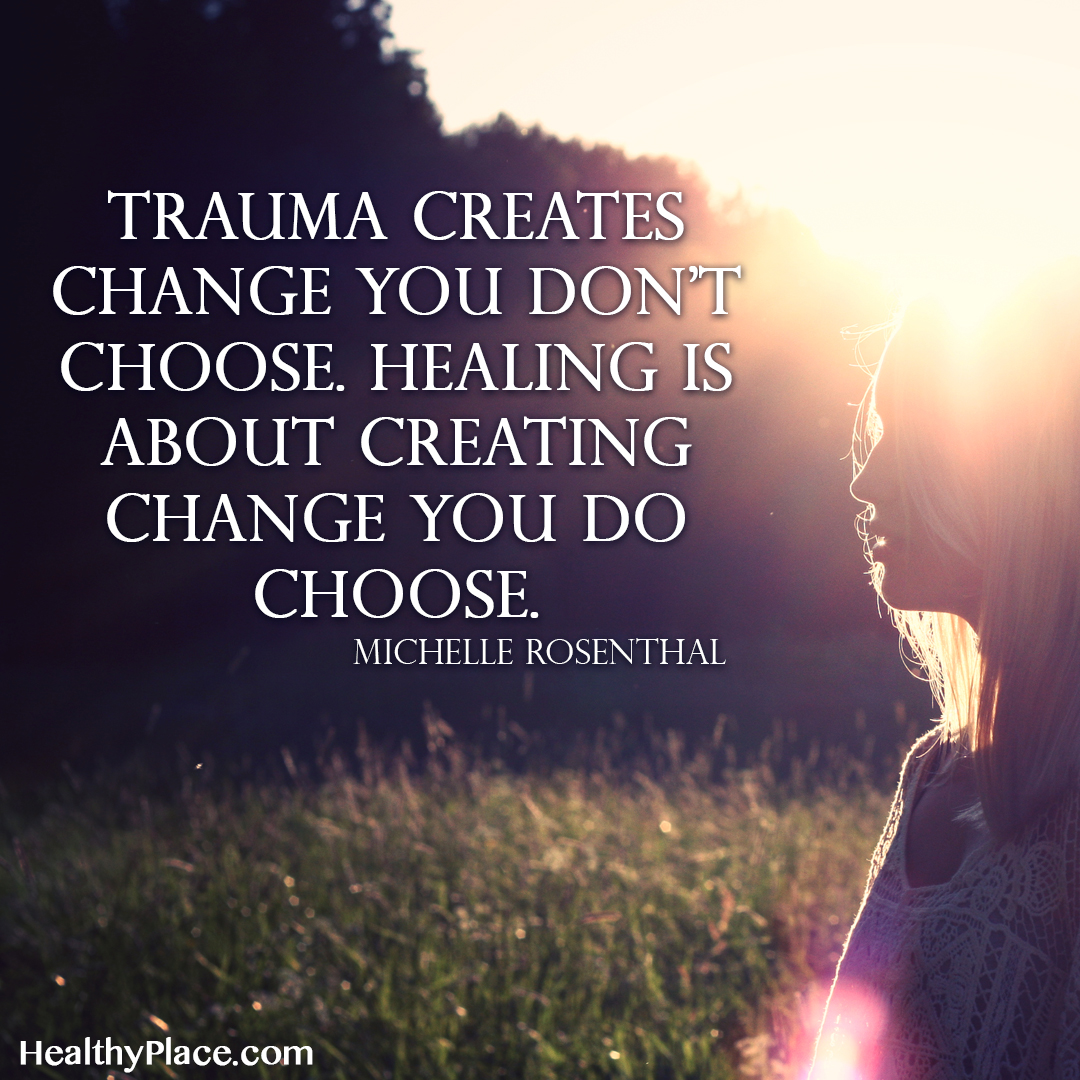
Truer words have never been spoken. I love this quote because it acknowledges the things you potentially can’t change, while redirecting you toward the things that you can.
Let’s talk about trauma. What the heck is trauma anyway? Trauma is defined as an emotional response to a terrible event. Immediately after the event, shock and denial are the most typical responses. Longer term response are more unpredictable and include mood lability, flashbacks, strained relationships and even physical symptoms like gi distress, headache, nausea and aches and pains. This sounds pretty straightforward but is actually much more subjective than you might think.
What is a terrible event? I am sure that we all have some standard ideas like natural disasters, rape, or war, but I am willing to bet that there are hundreds more, depending on the individual and the situation. It is not as black and white as it seems. Something that was pretty terrible for you may see like no big deal for someone else. To a large extent, it is a matter of perception. It is no one’s right to judge another on their response to trauma because it is impossible to truly be “in their shoes.”
So, what is post traumatic stress disorder? This is a mental health condition that is triggered by a terrifying event that is either experienced or witnessed. Symptoms include everything from nightmares, severe anxiety, flashbacks and uncontrollable ruminating thoughts about the event. It is normal to have temporary responses to trauma, but in individuals with ptsd, these responses don’t improve, often last for months or years and even disrupt daily functioning.
Well, I might as well tell you that I am having some ptsd after finishing chemo. Cancer, despite my positive attitude, still had it’s way with me mentally somewhat. It was, in fact, traumatic on multiple levels. Just like I have discussed before, I knew this was one of the risks after completing cancer treatment, not because anyone told me, but because it seemed logical. I mean, look at what my mind and my body have gone through. Chemo and the cancer itself blessed me with aches, pains, nausea, fevers, severe fatigue, neuropathy, etc and then when it was all over, my liver and kidneys took a hit and took awhile to recover….and then my thyroid died and it almost sent me into a coma….all when I was supposed to be done with all that! Mind you, I went through all of that while being off prozac so there was no mental health/anti anxiety buffer available so it was full on unrestrained feels and fear all day long. I got through it. I mean I am getting through it, but it has left some scars. Every twinge or pinch sends my brain racing with death defying possibilities if I allow it. Because, twinges or pinches meant something was terribly wrong before right? So why wouldn’t it mean that now? Oh yes, that’s right. I just had scans that were clear not even a month ago. I am ok. I saw it on film myself. Still, those rational thoughts aren’t the first ones that come to my mind when those symptoms come up.
Last night I was having a basic fibromyalgia flare, brought on by stress, like I have had a million times before, even before cancer. This time, you would have thought that I was dying. I started panicking. I decided that I wasn’t going to the party I was planning on attending. I put myself to bed and started ruminating on all the terrible possibilities until my amazing daughter pointed out that the symptoms were the same as always and she gently reminded me about the stressful day we had. Listening to her broke though my fear bubble just enough that I was able to get myself together and actually go to the party with my husband. We had a great time by the way. Thank goodness for her understanding and her voice of reason when I was being somewhat irrational. But, that’s what post traumatic stress is. It’s irrational. You sometimes cannot see your way out of it without some help.
As the quote above states, the kind of trauma that causes ptsd causes change that you don’t choose. I didn’t chose to get cancer and have organs shut down and be sick for months and months. That was a trauma and that is still affecting me. But, I can choose to continue to heal and get help for my symptoms rather than settling into them and just accepting them as if this is how the rest of my life is going to go regardless of my say so. I do have a choice! I am getting therapy. I am learning ( or trying to learn) new coping mechanisms. I am listening to my family. I am realizing that I do not have to turn in my Wonder Woman status just because I am dealing with this. I am embracing the fact that this is a battle that I do not have to fight all by myself and that is ok.
Speaking of not battling alone, I wanted to leave you with a screening guideline for PTSD from HelpGuide
Do you think you could have PTSD? Here are some screening questions. If you answer yes to three or more of these, you may also have PTSD and should seek help and therapy from a qualified mental health professional.
If you answered yes to three or more of these questions, you can get help. Cognitive Behavioral Therapy can be very helpful. When you look for a therapist, make sure to look for someone that specializes in trauma and PTSD. There are also a multitude of PTSD support groups in Michigan, which is where I live. Here is some contact information.
These are just a few resources. My point is, if you think you are suffering from PTSD, don’t go through it alone. There is help out there. You may not have chosen the trauma that was inflicted on you, but you can chose not to be it’s perpetual prisoner.
Dr. Katz
Wow! There are so many things they don’t tell you about being a cancer patient! When I say “they” I am referring to a proverbial all-inclusive group of people that includes everyone that is in charge of your care and even other patients who are unable or unwilling to share their experiences. I am learning a lot as I go and I am convinced more than ever that it is my mission to pass on what I know or have experienced to all of you. I am still determined to be the flashlight that helps guide patients through both their cancer experience and what comes after.
So, here is what I have realized. It is not really over until it’s over. What the heck do I mean? Let me explain. Most of us logically assume that when the last drop of chemo has coursed it’s way through our blood stream and the most recent scan confirmed that we are cancer free, at the moment, that we are, in fact, done! Yay! Hooray! Whooo! It is time to party, right? That’s what I thought. I really truly thought, or at least hoped, that the moment I got that final good news that this warm and fuzzy feeling of overall cleansing and good health was going to wash over me, my energy and health would be renewed and I would be ready for anything that came my way! Nothing could have been further from the truth. Now I am not blaming anybody. Nobody told me that that was going to happen. I am solely responsible for my own rose-colored glasses personal patient vision. However, nobody counselled me to the contrary either. I was just kind of left to figure it out after my perfunctory but heart felt congratulation speech from my health care team.
Here is what really happened. I got my good news. I was elated at the moment and kind of skipped out to my car( and then got short of breath from skipping..lol). Then I got into my car and, ironically, We are the Champions by Queen came blasting on the radio. I then proceeded to sob hysterically for about 20 min before driving home. I want to believe that the tears were all happy, but now I am not so sure. My mind started racing with all kinds of different thoughts ranging from yeah, I’m free to omg what do I do now and who is going to look out for me? My head was completely spinning. I had to take a minute before my head was clear enough to drive home. I started to realize that this was not really over. I had the next five years of my life mapped out with repeat scans and follow ups. Was it going to really be over then? What if I got some weird symptoms or twinge in the wrong place? Should I ignore it or should I worry because something else might be wrong?
I spent some quality time trying to talk myself down from the ceiling and rationalize the fact that I would need to give myself some time to be able to process information from my body normally again. That lasted all of a few minutes before I was on the phone to my therapist, making sure that I had regular appointments scheduled for the next several months. I was not going to be able to do this alone and I wasn’t allowed to restart my anti depressant for another month or so.
Ok, so now I had my therapy appointments in place. I rebooted my calm app on my phone. I reached out to my friends and fellow patients. I felt like I was doing everything right, or at least what I could do at the moment. Everything was going to be ok right? Nope! Then, the later complications of chemo started rolling in. My liver and kidneys took some hits and had to recover and my thyroid died completely. All the symptoms I was having that I was trying to assume were psychosomatic were actually real! Some of the stuff could have actually killed me! Thank goodness that we have modern medicine and options for all of them, but still scary nonetheless. There was no room for relaxing! There WAS still stuff to worry about! I knew it! My doctor said that some of these complications and side effects could be a factor for years afterward. Fantastic! I understood going in that there was going to be a risk trade off in exchange for curing my cancer, but on some level, I don’t think I fully understood just how significant the risks would be. I don’t think any patient does.
Here is where I think we need to do better for patients. We need to do better than handing someone a stack of papers several inches thick to read over and sign. We need more than just one chemo teaching session. We need to counsel patients that complications are real and that we need to have a reasonable level of vigilance after treatment is over. We need to recognize that PTSD is real and affects people that have experienced any kind of trauma, whether it is casualties of war or cancer. There needs to be a plan in place for those kind of things BEFORE they happen. We need to shape patient’s expectations for their treatment and for themselves BEFORE things happen. We need to give the a glimpse into what can happen and what they can expect and let them know that we have tools to address all of it. I have to believe that being proactive could potentially save a lot of suffering, both physical and mental, for patients. It has to be better than being behind the eight ball and struggling to deal with all of these issues when they are already full blown and both your mental and physical energy is already depleted.
Here is the bottom line. I am proposing a new plan. First, start with detailed one on one counselling before treatment starts for as many sessions as necessary with the key goal of shaping expectations and making preparations. Second, assign each patient a mentor who has actually gone through the process that can be a touch stone throughout treatment and beyond and who can offer encouragement, and more importantly, guidance and reassurance as things happen. Third, anticipate the possibility of PTSD, complications, and side effects after and during treatment and try to prepare the patient as best as possible. Set them up with therapy from the beginning. Start them on medications if possible during treatment. Be vigilant for side effects and try to catch them early. This all sounds like common sense but I am willing to bet that it is NOT common practice. I truly feel that implementing these few extra steps would have a tremendous positive return on patient recovery and outcomes that would far outweigh any additional healthcare costs incurred. I guess it boils down to what the true goal is : patient survival in terms of numbers versus patient survival in terms of whole health, mental and physical. Last time I checked, we are all more than just a number.
Dr. Katz